7 Common Watering Mistakes in Coastal Vegetable Gardens and How to Fix Them
Every coastal garden has a moment when the soil tells you something the calendar does not. Maybe it is the afternoon the wind swings round and the bean leaves go grey at the edges before dinner. Or the morning you push a finger into a bed that looked parched and find it cold and soggy two knuckles down. On an exposed island plot, water behaves differently: it arrives sideways as spray, drains fast through sandy ground, and evaporates before it has done any real good. Most watering troubles here are not the result of laziness. They come from habits borrowed from sheltered gardens. These are the seven that cost island growers the most, and what to do instead.
1. Watering to a schedule instead of to the soil
Overwatering rarely announces itself. It creeps in as yellowing lower leaves, stalling growth and soil that stays dark and cold for days. Fungus gnats hovering over a bed are another hint, and so is a faint sour smell when you turn the surface. Because island plots are often sandy, growers assume water vanishes instantly and water generously every evening. Sandy ground does drain quickly, but a compacted layer or a rock ledge a spade's depth down can hold a perched puddle that drowns roots just as effectively as a flooded clay pan.
Do the finger test before you reach for the can. Push a finger in up to the second knuckle in open ground, or a couple of centimetres in a seed bed, first thing in the morning. If it comes out damp and cool, step away. For containers, lift the pot: a well-watered pot is heavier than you expect, and a dry one is startlingly light. Then let the plant's behaviour guide you — a plant that wilts at noon and recovers by evening is usually fine; one that stays limp all day is thirsty.
2. Little and often, which keeps roots on the surface
A quick sprinkle every evening feels diligent and does very little. It wets the top two or three centimetres, where the roots then concentrate, and those shallow roots are the first to bake when the sun comes out or the wind picks up. The plant becomes dependent on you rather than on the soil beneath it, and a single missed day can flatten a row of lettuce.
Water deeply and less often. Aim to push moisture down 15 to 20 centimetres, then leave the surface to dry between rounds. On very sandy ground, water in two passes: give the bed a first soak, go and fill the can again, then return. The first pass wets the surface so the second soaks in rather than running off. Direct the water to the root zone and the base of the stem, and let the soil surface dry out now and then, which discourages slugs and surface-rooted weeds.
3. Forgetting what the wind takes
Wind is the quiet thief of island gardens. A steady breeze pulls moisture through the leaves far faster than still air, and a gale on a bright day can undo a morning's watering by lunchtime. Spray carried on the wind also leaves a film of salt on foliage, which burns leaf edges and scorches young growth on the exposed side of the plot.
- Plant or build a windbreak: a 50 percent permeable mesh fence, or a hedge of rosemary, tamarisk or escallonia. Solid walls simply push turbulence over the top.
- Water on the sheltered, windward side first and give those beds more than their share — they dry out first.
- Skip watering on windy afternoons. Much of it drifts away before it lands.
- After a salt-laden gale, rinse foliage with fresh water in the morning so leaves dry before evening.
- Group thirsty crops — courgettes, beans, brassicas — behind a windbreak and put rosemary, thyme and lavender on the exposed edge.
4. Putting the water on the leaves
Walking the plot with a hose and spraying everything overhead is quick, but on a coast it has consequences. Wet foliage on a still, humid evening is an invitation to mildew and blight, and splash from soil onto lower leaves spreads disease from plant to plant. Water landing on leaves also does nothing for the roots that need it.
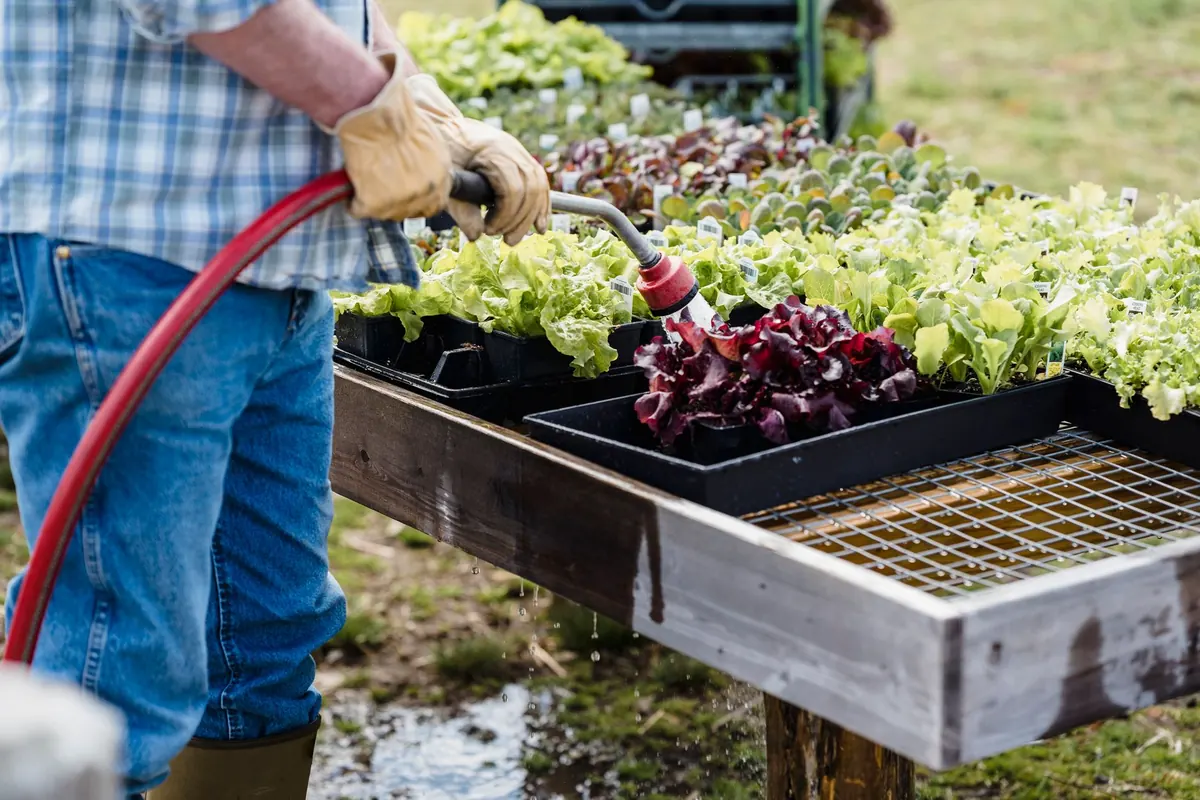
Use a can without a rose, or a drip line, and deliver water at the base. If you must water overhead — for leafy crops that benefit from a rinse, or to settle dust after a dry spell — do it early in the morning so leaves are dry before nightfall. Keep a dedicated can for rinsing salty foliage and don't confuse the two jobs.
5. Ignoring drainage, pots and raised beds
Watering well means nothing if the water cannot leave. Dig a hole a spade deep, fill it with water and see how long it takes to disappear; if it is still there the next morning, you have a drainage problem and no amount of extra watering will fix it. Break up any compacted layer, work in compost, and plant on slight ridges so surplus winter rain runs off.
Containers need their own routine. Stand pots on feet, empty saucers after rain, and check that drainage holes are not blocked by a mat of roots. Container compost accumulates salts over a season, especially where spray blows in, so flush pots occasionally with a slow, generous soak of fresh water and let it run through.
6. Leaving the soil bare and watering at the wrong hour
Bare soil on an exposed plot loses moisture fast. A mulch of straw, compost or well-rinsed seaweed, spread 5 to 8 centimetres deep after the soil has warmed and been watered, cuts evaporation dramatically and keeps roots cool. Keep mulch clear of stems to avoid rot.
Timing matters too. Watering at midday is not harmful to plants in the way old advice suggests, but on a windy island it is wasteful. Evening watering leaves foliage and soil surface damp through the coolest hours, which suits slugs and fungal disease. Early morning is the sweet spot: the plant has water for the heat of the day, and any wet leaves dry off quickly.
A coastal watering routine that holds up
Walk the plot with a cup of coffee and test the soil before you turn on anything. Water deeply before mid-morning, windward beds first, and keep a note of which beds dry fastest — your own record beats any general rule. Mulch what you have watered, rinse salt after gales, and resist the urge to top up beds that are already damp. Do that for a season and you will water less, and your vegetables will look better for it.
Photo: Greta Hoffman / Pexels